 Business License

Solved: The Wind Turbine Blade Recycling Challenge | ZAECOTECH Shredding Solutions
As the global wind energy sector matures, decommissioned wind turbine blades represent a rapidly growing waste stream. Recycling composite FRP (fiberglass-reinforced polymer) and CFRP (carbon fiber-reinforced polymer) structures presents daunting operational hurdles:
Extreme Structural Strength & Bulk: Massive, hollow turbine blades are designed to withstand hurricane-force winds, making them extremely difficult to shear or volume-reduce on-site.
Severe Tool Abrasion & Dust: Glass fiber and carbon fiber are intensely abrasive, causing rapid blade wear, edge dulling, and airborne fibrous dust hazards during conventional crushing.
Complex Multi-Material Matrix: Blades integrate composite skins, balsa wood or PET foam cores, and heavy steel root-end connection bolts that can shatter standard cutting tools.
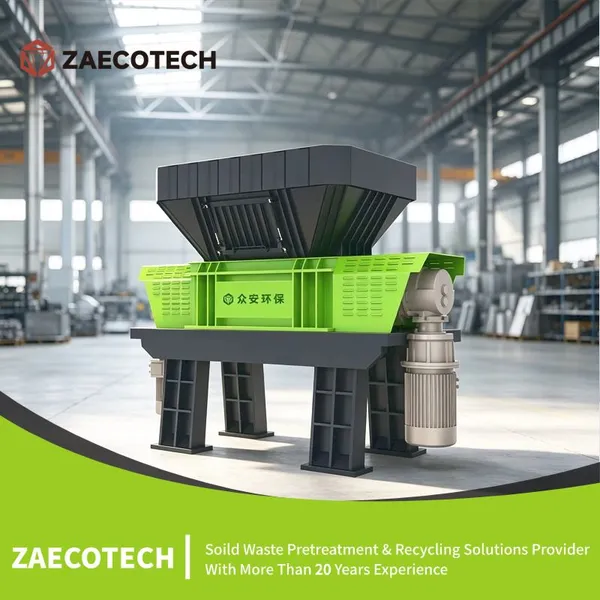
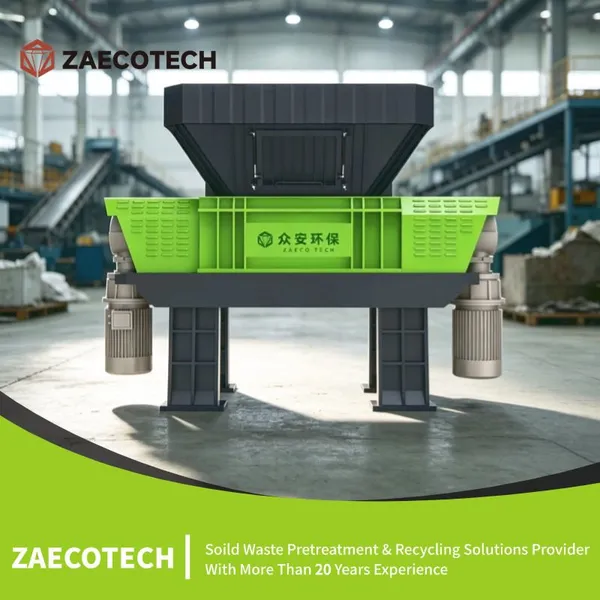
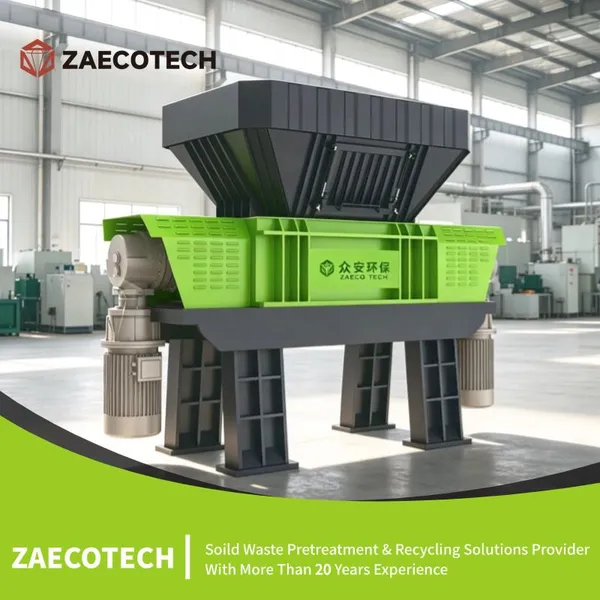
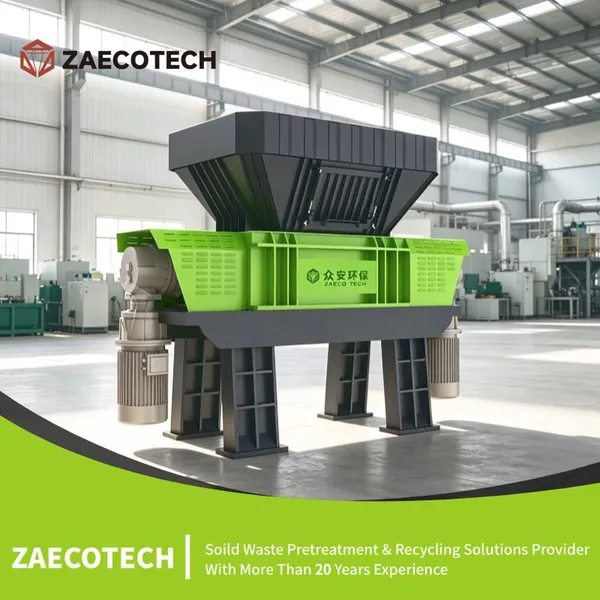
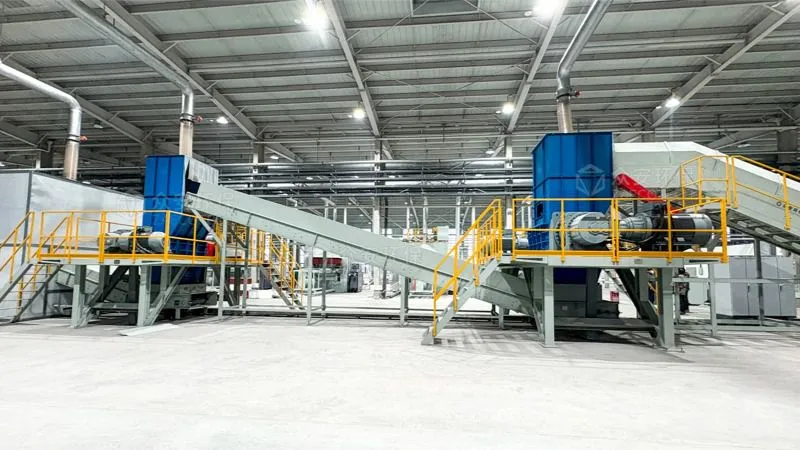
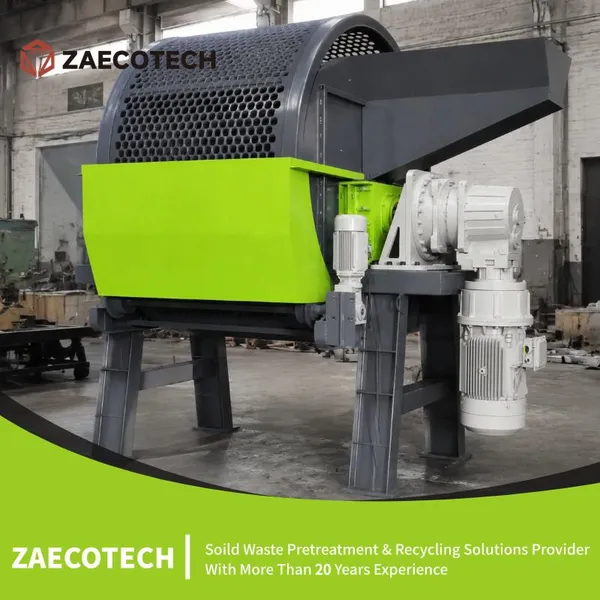
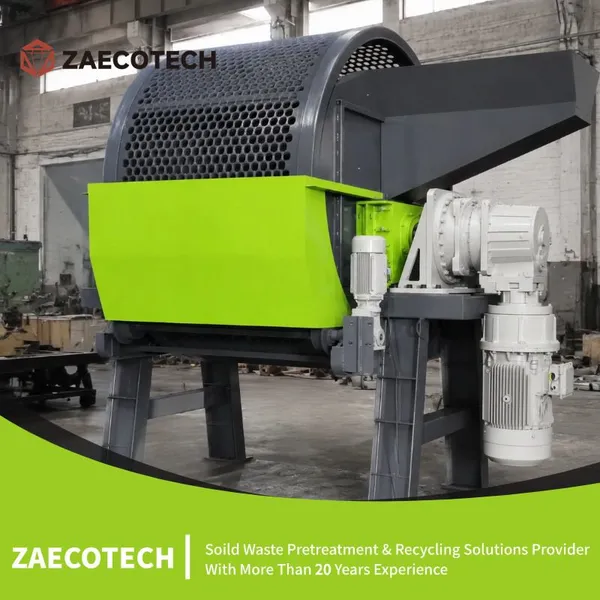
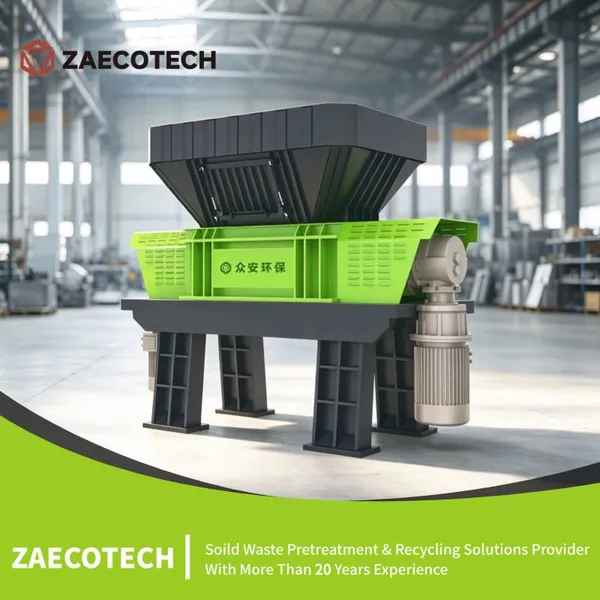
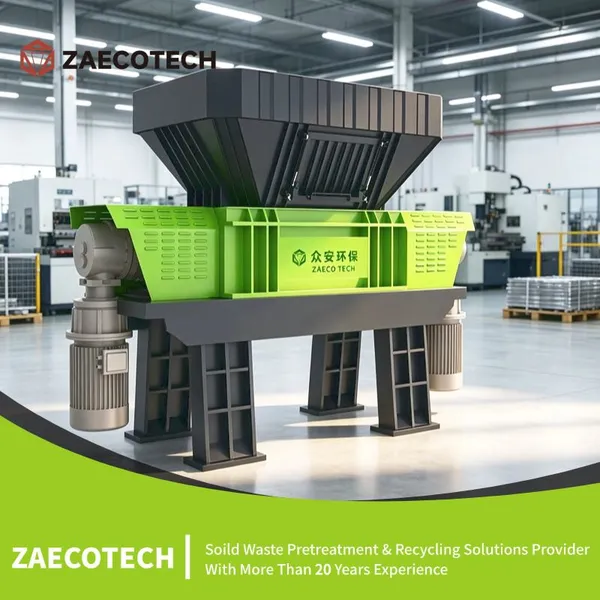
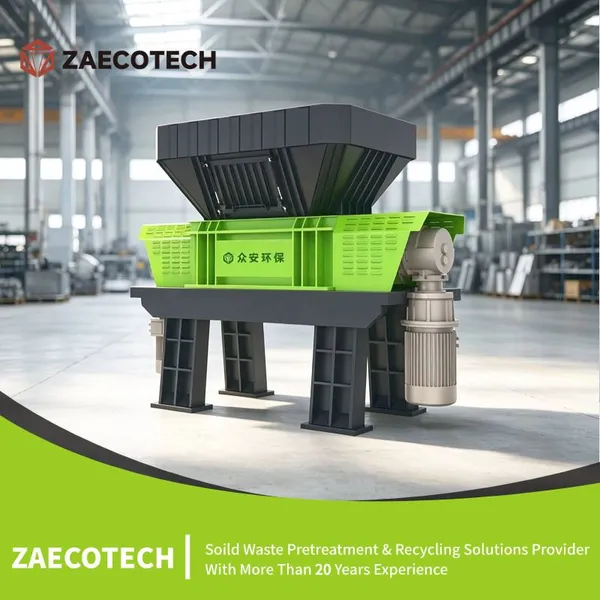
The ZAECOTECH Wind Turbine Blade Shredder provides a heavy-duty size reduction system engineered specifically to process large-scale composite waste efficiently.
Technical Advantages & Key Features
1. High-Torque Dual Shaft Shearing for Ultra-Tough Composites
Driven by high-power hydraulic or motor drive systems, low-speed dual rotors deliver immense torque to slice through multi-layer fiberglass skins, inner spar caps, and dense structural core materials without stalling.
2. Specialized Anti-Abrasive Alloy Cutters
To combat the severe wear caused by fiberglass and carbon fibers, ZAECOTECH utilizes premium forged alloy steel knives treated with specialized surface hardening. The optimized cutter geometry maintains sharp cutting edges over extended operational periods, minimizing maintenance downtime.
3. Integrated Dust Control & Sealed Chamber Configuration
Processing glass fiber generates fine, airborne particulates. The shredder features a sealed cutting chamber with integrated dust extraction flange connections, ensuring full compliance with environmental safety standards and protecting operator health.
4. Smart PLC Automation with Heavy Overload Protection
An intelligent Siemens PLC system actively monitors rotor current and hydraulic pressure. If a thick steel root insert or un-shearable metal component enters the chamber, the system automatically triggers an auto-reverse and clearing cycle to protect gears and drive shafts.
Material Application Scope
| Composite Category | Application Examples |
| Wind Energy Scrap | Decommissioned FRP/CFRP wind blades, blade offcuts, manufacturing scrap |
| Fiberglass Structures | FRP boats, storage tanks, composite pipes, pultruded profiles |
| Carbon Fiber Waste | Aerospace CFRP panels, automotive carbon composites, structural beams |
Business Value Delivered
Substantial Volume Reduction: Reduces bulky, hollow blade sections by up to 80%, drastically cutting transport expenses from wind farm sites to recycling facilities.
Ideal Pre-Treatment for Resource Recovery: Produces uniform shredded flakes ideal for co-processing in cement kilns (energy + mineral recovery), mechanical recycling, or pyrolysis processing.
👉 Ready to solve your wind blade recycling challenge? Visit theZAECOTECH Wind Turbine Blade Shredder Product Pageor contact our application engineers for a custom processing proposal.
Recently Posted
-
What Is Biomass Pretreatment Equipment and Why Is It Important?
September 22, 2026Biomass pretreatment equipment is designed to prepare agricultural residues, wood waste, and other biomass materials before they e Read More
 -
How ZAECOTECH Bulky Waste Shredders Streamline City Cleanups
September 22, 2026In municipal solid waste management and urban sanitation, processing bulky waste—such as discarded sofas, mattresses, wardrobes, c Read More
 -
Unlocking Tire Recycling Profits: How ZAECOTECH Tire Shredders Overcome Heavy-Duty Processing Challenges
September 15, 2026In the global scrap tire recycling industry, processing end-of-life tires (ELTs) presents severe mechanical hurdles. From passenge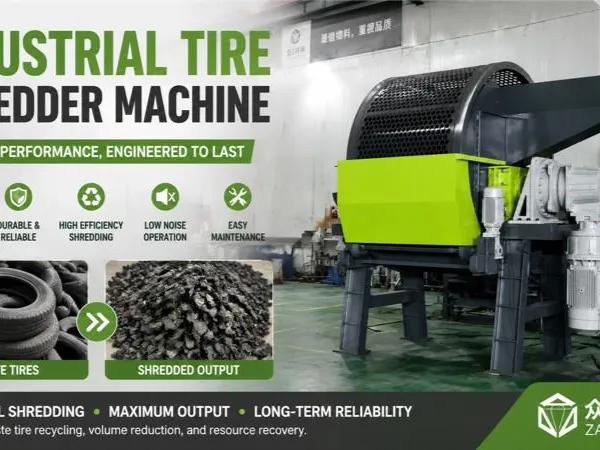 Read More
 -
Maximizing E-Waste Recovery: How ZAECOTECH E-Waste Shredders Solve E-Scrap Processing Challenges
September 14, 2026In the e-waste recycling industry, processing electronic scrap—such as printed circuit boards (PCBs), computer hard drives, consum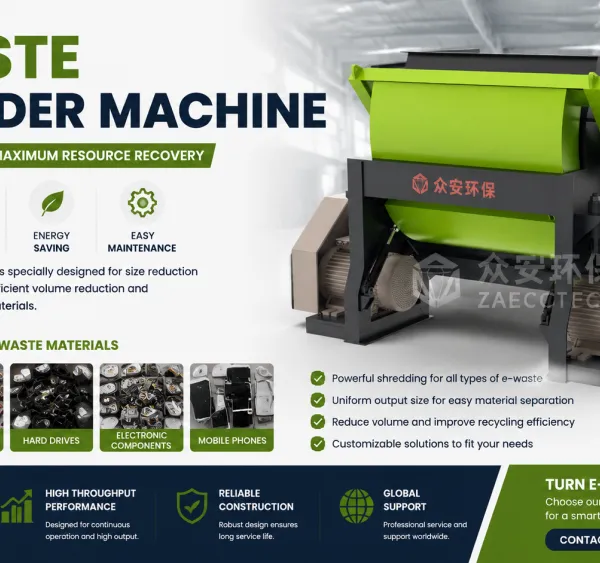 Read More

Contact Us
Recommended Products
-
 Waste Tire Recycling Machine and Process of Recycling Tyres With Rubber Tyre Recycling Plant CostUS$ 15000 - 300000MOQ: 1 Piece
 -
Industrial Recycling Machine Systems and Technology for E Waste and Garbage Recycling in IndiaUS$ 15000 - 300000MOQ: 1 Piece
-
China Recycling Machine for Bulky Waste Shredder and Mattress Recycling MachineryUS$ 15000 - 300000MOQ: 1 Piece
-
Car Tire and Tyre Shredder and Recycling Machine for Tyre Recycling PlantUS$ 15000 - 300000MOQ: 1 Piece
-
Automatic Scrap Tire Shredder and Tdf Production Equipment for Waste Tyre RecyclingUS$ 15000 - 300000MOQ: 1 Piece
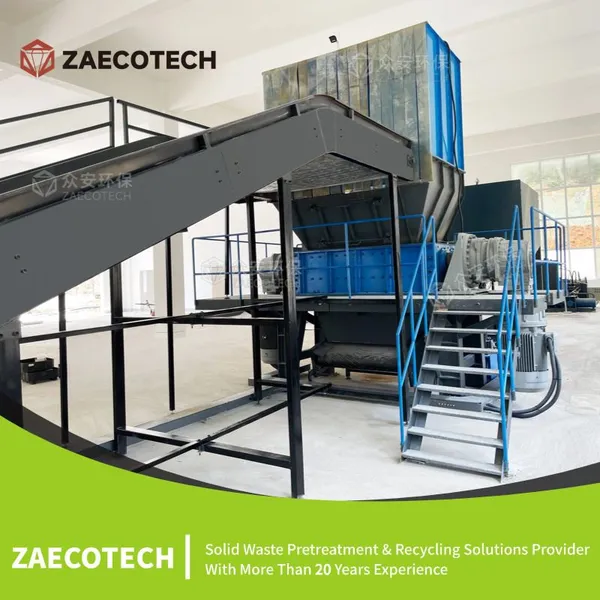
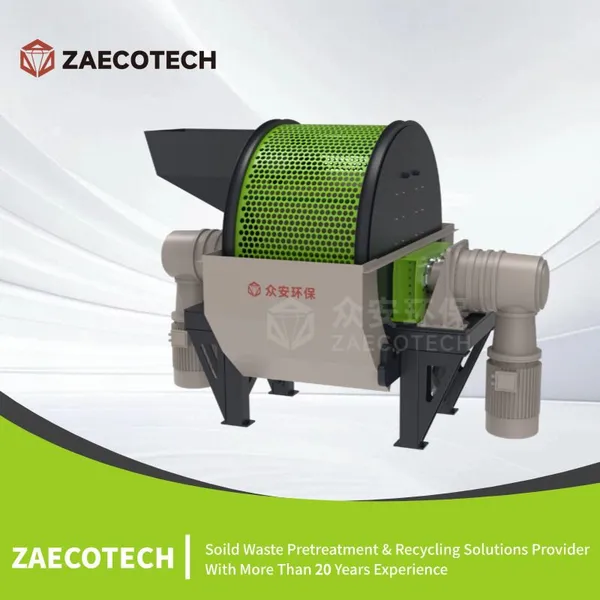
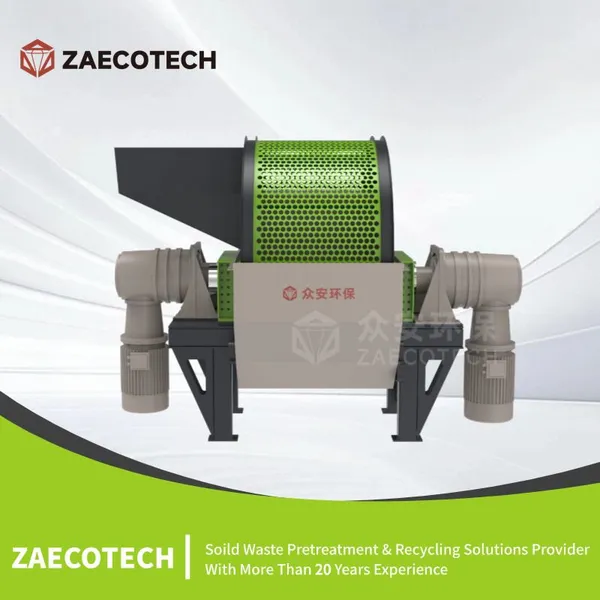
-
Car Tire Tyre Recycler and Shredders for Process of Tyre Recycling in ChinaUS$ 15000 - 300000MOQ: 1 Piece
-
Scrap Tire Cutter and Tyre Recycle Machine for Rubber Waste RecyclingUS$ 15000 - 300000MOQ: 1 Piece
-
Shredder for Tyre Powder Business and Scrap Tire Processing Solutions in Italian MarketUS$ 15000 - 300000MOQ: 1 Piece
-
Tyres Tyre Shredder Machine for Sale for Used Tire Recycling CompaniesUS$ 15000 - 300000MOQ: 1 Piece
-
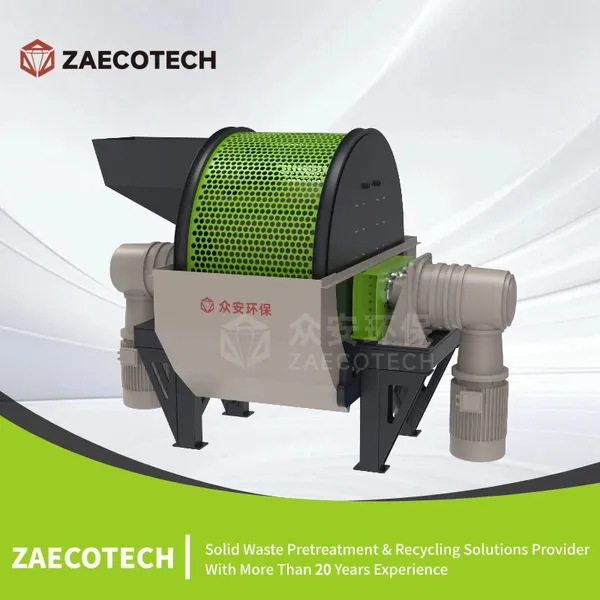
Waste Tyre Recycling Machine and Tire Shredder for Sale in India Scrap Tire Recycling SolutionsUS$ 15000 - 300000MOQ: 1 Piece
-
Industrial Efficient Rubber and Tdf Shredding Crusher Applications for FactoryUS$ 15000 - 300000MOQ: 1 Piece
-
Rubber Tire Tyre Recycling Plant for Sale With Complete System for Waste Tire ProcessingUS$ 15000 - 300000MOQ: 1 Piece
-
Industrial Used Pallet Power Shredder Machine for Sale for Residue Waste ManagementUS$ 15000 - 300000MOQ: 1 Piece
-
Automatic Strong Plastic Crusher Machine Price for Waste Plastic RecyclingUS$ 15000 - 300000MOQ: 1 Piece
-
Cardboard Box Shredder Machine for Industrial Cardboard Shredding and Packaging RecyclingUS$ 15000 - 300000MOQ: 1 Piece
-
High Torque Low Speed Two Shaft Shredder for Efficient Industrial Waste Material Pre-treatmentUS$ 15000 - 300000MOQ: 1 Piece
-
Twin Shaft Rotary Shear Shredder for Specialized Waste Recycling and Contamination Reduction SolutionsUS$ 15000 - 300000MOQ: 1 Piece
-
24/7 Operation High Wear-Resistant Industrial Material Shredder for Waste ManagementUS$ 15000 - 300000MOQ: 1 Piece
-
Tank Shredder Strong Shaft Shredder Machine for Industrial Waste RecyclingUS$ 15000 - 300000MOQ: 1 Piece
-
Two-Shaft Pre-Shredder Manufacturing for Industrial Waste Recycling SolutionsUS$ 15000 - 300000MOQ: 1 Piece